
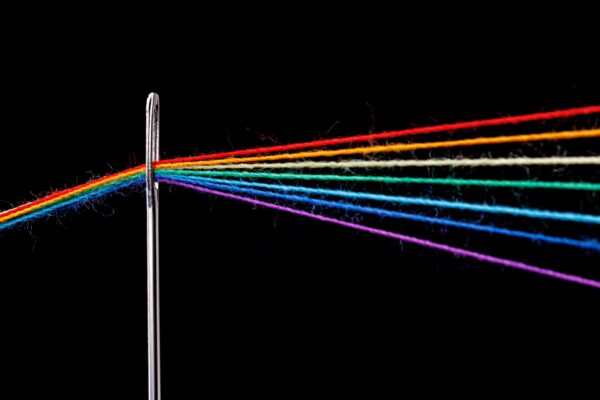
A major question in classical physics was how light behaves, and Newton’s prism experiment was a big step toward understanding it. The experiment shows what happens to white light when it goes through glass, where colors come from, why they separate, and how this changed how scientists thought about light and color.
In the 17th century, when many people thought that glass or air made colors, Isaac Newton studied light. People thought that the prism was a tool that made light more colorful. Newton didn’t believe such speculation and set up a controlled experiment to see how light changed before and after it went through a prism.
The test took place in a dark room with a small hole in the window shutter. A narrow beam of sunlight came into the room and went through a triangular glass prism. A band of colors stretched across the other wall. This band had red, orange, yellow, green, blue, indigo, and violet in a set order.
Newton saw that each color always bent at a different angle. The violet light bent the most, while the red light bent the least. This behavior showed that white light wasn’t just one thing; it was made up of many parts.
These findings corroborated a novel elucidation of light.
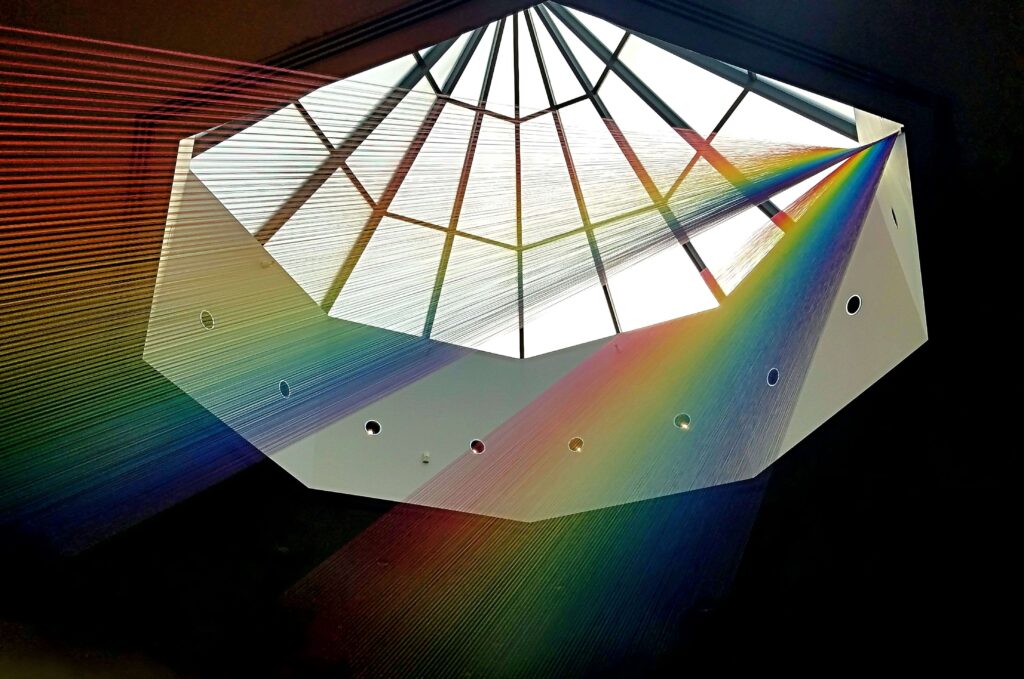
When light goes from air to glass, it slows down. This is what makes the prism work. Different colors slow down by different amounts. This change in speed makes light bend at the surface, which is called refraction. The beam spreads out into a visible spectrum because each color bends in a different way.
Newton looked into this idea more by putting a second prism after the first one. When he sent one color into another prism, it did not split again. It just went in a different direction. The results showed that the prism didn’t make colors; they were already in white light.
Recombination was also part of the experiment. Newton used a lens to put the colors back together. When put together, they made white light again. This procedure proved that white light is made up of all the colors in the spectrum.
These results formed the foundation of physical optics.
The prism makes a visible spectrum that shows a smooth change from one color to the next. There are names for the main areas, but there are no clear lines between them. The human eye sees changes that happen slowly, not sharp lines.
Every color has a different wavelength. Red light has longer wavelengths than violet light. The difference in wavelength is what makes the angles of refraction not equal.
In many fields of science, the structure of the spectrum is important. It talks about rainbows, color filters, and the first ways to use spectroscopy. The experiment also helped scientists later figure out how light behaves like waves.
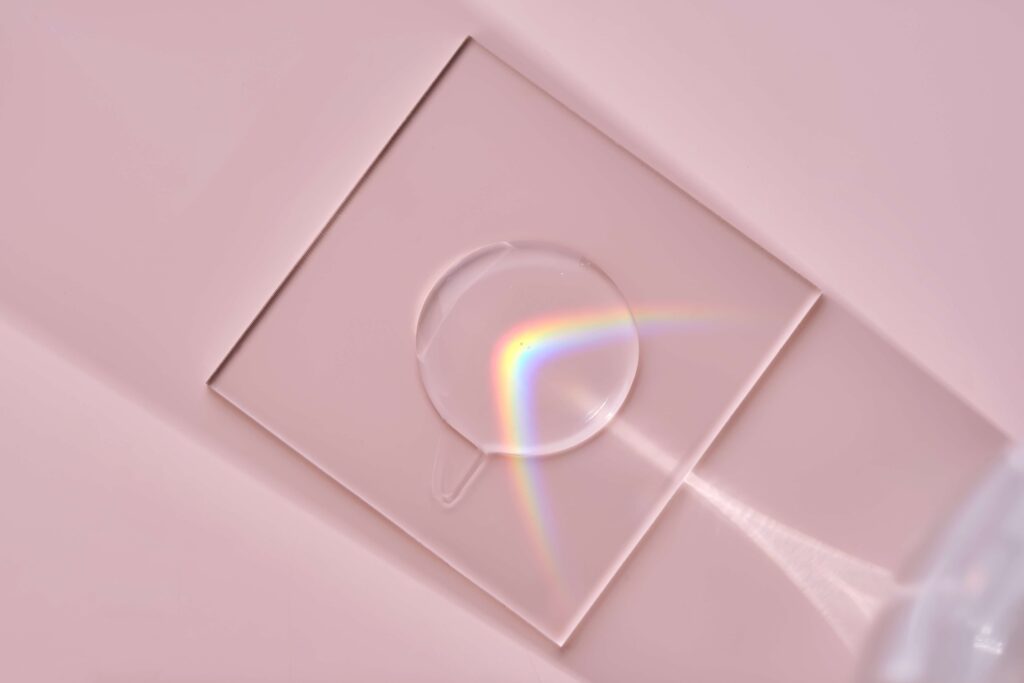
Scientists still use Newton’s prism experiment to teach physics. It shows how to use scientific reasoning, controlled observation, and experimental proof. The setup is easy, but the results are profound.
The experiment is also linked to modern optics. Spectrometers, cameras, and optical sensors all work on the same basic idea of separating wavelengths. Knowing how light travels through glass is useful for making lenses and for sending and receiving light signals.
Wave theory is often used to explain things today, but the basic observation is still the same. The prism splits light up based on the physical properties of color.
Comments are closed